
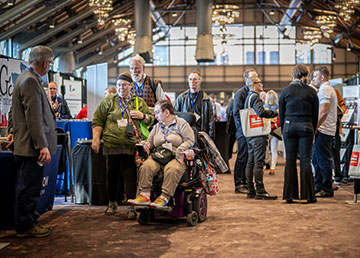
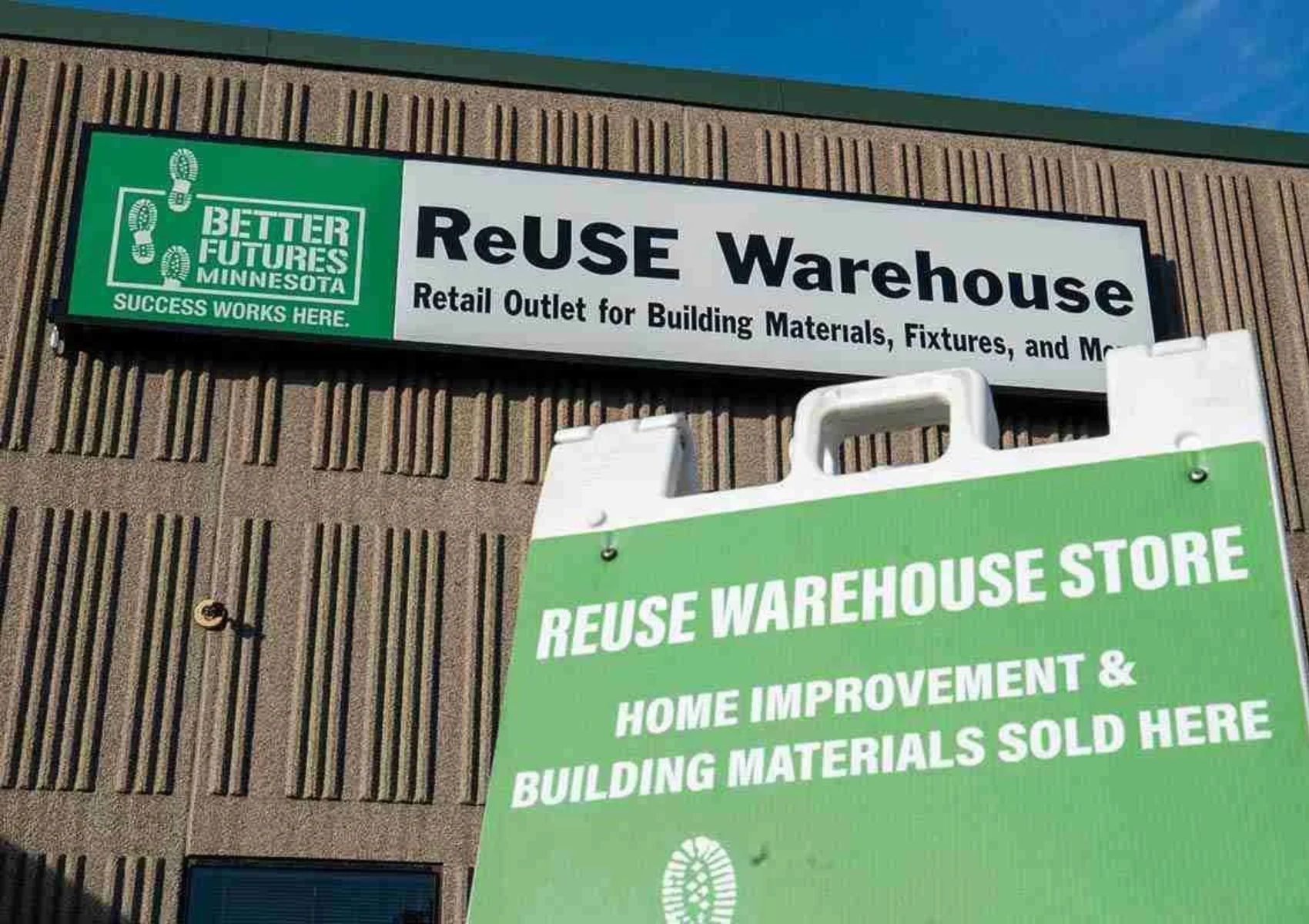
Join the Minnesota Custom Architects Network (CRAN) for a presentation and tour of Better Futures Minnesota.
When: Wednesday, October 14, 4:00–5:30 pm
Where: Better Futures Reuse Warehouse (2620 Minnehaha Ave., Minneapolis, MN 55406)
Continuing Education: This program has been submitted for and is anticipated to be approved for 1.5 AIA HSW LUs.
Cost: $35 with CE credit / free without
Register »
Followed by (optional) happy hour at Arbeiter Brewing Company!
Understanding Building Material Reuse Through the Eyes of a Deconstruction Contractor
Construction and demolition debris is the largest solid waste stream in the United States—roughly two-thirds of everything the country throws away each year, and more than 90 percent of it comes from buildings being taken down. How a building comes apart is an architect’s decision, made in the demolition plan. This HSW program pairs a presentation with a guided tour of a working deconstruction and reuse warehouse to examine what that decision governs: airborne contaminants on an occupied renovation site, the hazardous materials sequence that must precede any crew, and whether a building’s materials are recovered or landfilled. The tour takes up the other half — which materials in a house can actually be salvaged and how they are recovered, and where reclaimed doors, millwork, flooring, and brick can be specified back into a project. 1.5 LU|HSW pending approval.
Presenters: Alex Baldwin, Better Futures Minnesota Enterprise Services Manager, Certified Deconstruction Trainer (through Build Reuse) since 2019. Margo Ashmore, AIA Minnesota and Build Reuse individual member, former Old House Certified real estate broker and former coordinator of MSP Home Tour.
Learning Objectives:
- Distinguish manual deconstruction from mechanical demolition, and identify when hand removal limits airborne dust and hazardous-material exposure for occupants, neighbors and crews.
HSW: Health and Safety. Protects building occupants, neighbors and workers from recognized airborne hazards. - Document and sequence deconstruction in the demolition plan, schedule and construction administration. This includes the hazmat assessment, abatement, permitting and utility-capping steps that must be verified before any crew enters, and who is responsible for confirming them.
HSW: Safety and Welfare. The architect’s documentation keeps workers out of buildings with unaddressed regulated materials or live services. - Identify which materials in an existing home can be salvaged and where they can be reused, recognizing the limits set by fire ratings, energy certification, egress dimensions, structural grading and UL listing.
HSW: Safety and Health. Keeps uncertified assemblies and unassessed finishes out of occupied buildings. - Explain the environmental burden of construction and demolition waste, and how reuse, nonprofit donation and post-project impact reporting reduce it on a residential project.
HSW: Welfare. Benefits the environment and the surrounding community.